April 14 The Day of Baisakhi Resilience Revolution and Remembrance

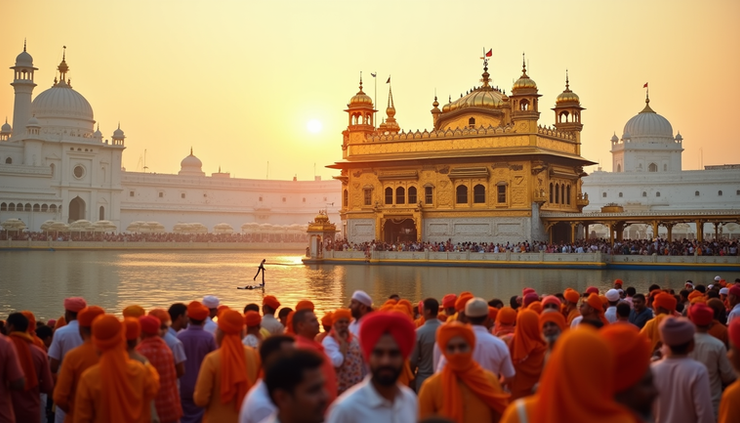
April 14 is a date that carries layers of meaning far beyond the bright celebrations of Baisakhi. Every year, Punjab bursts into life with the sounds of dhol drums and the vibrant steps of bhangra dancers. The Golden Temple fills with devotees and visitors, all drawn to the energy of this harvest festival. Yet beneath the surface, April 14 holds stories of courage, defiance, and transformation that have shaped South Asian history. From the founding of the Khalsa in 1699 to the tragedy at Jallianwala Bagh in 1919, and the birth anniversary of Dr. B.R. Ambedkar in 2026, this day connects moments of spiritual strength, colonial resistance, and social justice.
The Khalsa Founding Story on April 14, 1699
The story of April 14 begins in 1699 at Anandpur Sahib, where Guru Gobind Singh gathered thousands of followers. He made a bold demand: who among them would offer their head for the faith? Five men stepped forward, known as the Panj Pyare, or the Five Beloved Ones. This moment marked the birth of the Khalsa, a brotherhood that rejected caste and hereditary privilege. The Khalsa was not just a religious order but a radical statement of equality and courage.
The Khalsa founding story on April 14 challenges the social norms of its time. It created a community where identity was based on shared values rather than birth. The initiation ceremony involved baptizing the Panj Pyare with Amrit (holy water), symbolizing their rebirth as warriors of faith and justice. This event transformed Baisakhi from a simple harvest festival into a day of spiritual and social revolution.
The Khalsa’s principles of bravery, equality, and service continue to inspire millions. The symbolism of the five Ks—Kesh (uncut hair), Kara (steel bracelet), Kanga (wooden comb), Kachera (cotton undergarments), and Kirpan (ceremonial sword)—originated from this day and remain central to Sikh identity.
The Jallianwala Bagh Baisakhi Connection of 1919
The following century brought a darker chapter to April 14. On April 13, 1919, the eve of Baisakhi, thousands gathered at Jallianwala Bagh in Amritsar. The crowd included farmers, pilgrims, and families celebrating the festival. British General Reginald Dyer ordered troops to fire on the unarmed crowd without warning. The enclosed garden had only one narrow exit, trapping many inside.
The massacre resulted in hundreds of deaths and thousands of injuries. It shocked the nation and became a symbol of colonial brutality. The Jallianwala Bagh Baisakhi connection is a stark reminder of how a day of joy was turned into a day of mourning and resistance. The event galvanized the Indian independence movement. Leaders like Mahatma Gandhi called it a turning point, and Rabindranath Tagore returned his knighthood in protest.
This tragedy deepened the meaning of Baisakhi for many. It became a day to remember sacrifice and to renew the fight for freedom and dignity. The Jallianwala Bagh site today stands as a memorial, preserving the memory of those who lost their lives.

Ambedkar Jayanti 2026 and the Continuing Struggle for Equality
April 14 also marks the birth anniversary of Dr. B.R. Ambedkar, celebrated as Ambedkar Jayanti. In 2026, this day will commemorate his 135th birth anniversary. Ambedkar’s work as the chief architect of the Indian Constitution was a continuation of the fight for dignity and equality that began centuries earlier with the Khalsa.
Ambedkar challenged caste discrimination and worked tirelessly to secure rights for marginalized communities. His vision of India was one where justice and equality were guaranteed by law. Ambedkar Jayanti 2026 will be a moment to reflect on how his legacy intersects with the Khalsa founding story April 14 and the Jallianwala Bagh Baisakhi connection.
Together, these events reveal the hidden stories of Indian festivals. They show how cultural celebrations often carry deeper meanings tied to social change and resilience. Ambedkar’s life reminds us that the struggle for equality is ongoing and that April 14 remains a powerful symbol of hope and determination.

The Layers of April 14 in Indian History and Culture
April 14 is more than a date on the calendar. It is a day where history, culture, and identity intersect. The Khalsa founding story April 14 introduced a new social order based on equality and courage. The Jallianwala Bagh Baisakhi connection reminds us of the cost of colonial oppression and the power of collective resistance. Ambedkar Jayanti 2026 highlights the ongoing fight for social justice and constitutional rights.
For history and culture enthusiasts, especially young Punjabi and Sikh diaspora readers, these stories offer a richer understanding of Baisakhi 2026 history. They reveal how festivals can hold hidden stories of Indian festivals that inspire and challenge us. Creative professionals who follow Indian heritage content can find in April 14 a source of powerful narratives that blend tradition with transformation.


