The Quiet Canvas Movement: A Digital Detox for the Soul

Updated: Mar 6
How The Quiet Canvas Movement Challenges Digital Overload
The average person spends several hours daily on digital devices, often in fragmented bursts that fuel dopamine loops. This constant stimulation can lead to mental fatigue and a craving for deeper, more meaningful experiences. The Quiet Canvas movement responds by stripping art down to its essentials. It focuses on minimalism art that demands quiet observation rather than quick consumption.
Artists featured on platforms like Colossal and Scroll are pioneering this approach by using traditional Indian pigments such as natural ochres, indigo, and turmeric. These pigments bring a rich, earthy quality to the work, connecting viewers to nature and history. The pieces often feature subtle textures and restrained color palettes, inviting viewers to slow their gaze and appreciate the nuances.
This approach contrasts sharply with the flashy, fast-paced visuals dominating digital feeds. Instead of overwhelming the senses, these artworks create calm, meditative spaces that support slow living and mindful presence.

Canvas textured with traditional Indian pigments in soft beige and ochre
The Role of Traditional Indian Pigments in Contemporary Indian Art
Traditional Indian pigments have a long history rooted in natural materials and ancient techniques. These pigments are prized for their durability, subtlety, and connection to the earth. Contemporary Indian artists are rediscovering these materials to create works that feel both timeless and modern.
By mixing these pigments with abstract forms, artists create a dialogue between past and present. The pigments’ muted, organic colors contrast with the bold, geometric shapes common in abstract art. This fusion results in pieces that feel grounded yet innovative.
For example, artist Anjali Shah uses natural indigo and red ochre in her minimalist compositions. Her work features large, flat planes of color interrupted by delicate, hand-applied textures. The result is a quiet but powerful presence that invites viewers to pause and reflect.
This use of traditional pigments also supports sustainability in art. Unlike synthetic paints, these natural materials have a lower environmental impact, aligning with the values of many collectors and designers who prioritize eco-conscious choices.
Creating Spaces for Digital Detox Through Interior Design Trends
The Quiet Canvas movement is influencing interior design trends by encouraging the integration of minimalist art that promotes calm and focus. Interior designers are incorporating these artworks into homes and offices to create digital detox zones—areas free from screens and distractions.
Key design strategies include:
Using neutral, earthy color palettes inspired by traditional pigments to foster tranquility.
Placing ultra-minimalist artworks in quiet corners or reading nooks to encourage mindfulness.
Combining tactile materials like raw wood, linen, and clay with textured canvases to enhance sensory experience.
Designing spaces with natural light and minimal clutter to complement the art’s simplicity.
For example, a living room might feature a large, textured canvas in muted ochre tones hung above a simple wooden bench. The space invites occupants to sit quietly, away from devices, and engage with the artwork’s subtle details.
This approach supports slow living by encouraging intentional moments of stillness and appreciation within daily routines. It also helps balance the high-tech, fast-paced environments many people inhabit.
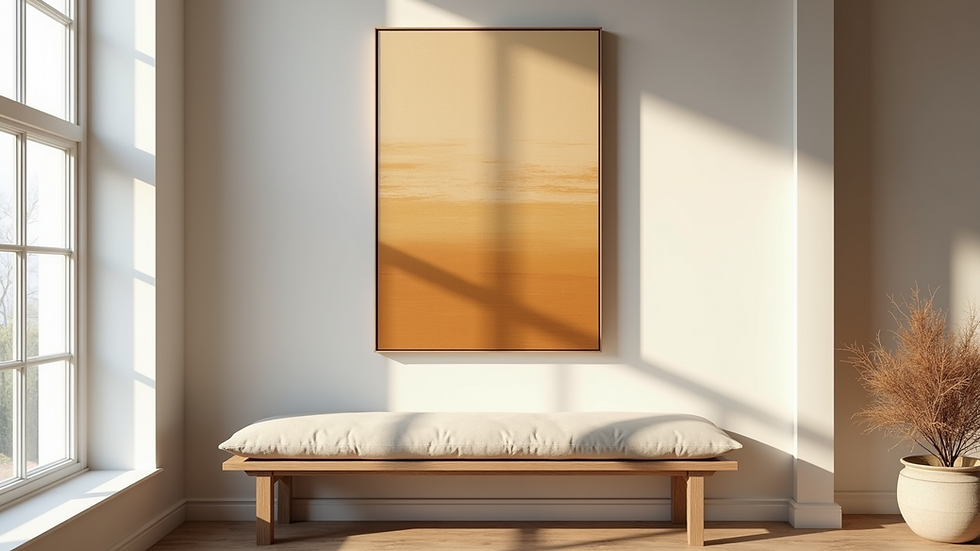
Minimalist living room with textured canvas in muted ochre tones
How Collectors and Creatives Can Embrace The Quiet Canvas
For art collectors and Gen-Z creatives interested in this movement, there are several ways to engage:
Seek out artists blending traditional pigments with abstract minimalism. Platforms like Scroll and Colossal regularly feature emerging talents in this space.
Choose artworks that invite close, slow observation. Look for pieces with tactile surfaces and subtle color shifts rather than bold, loud visuals.
Incorporate these works into spaces designed for calm and focus. Use minimalist furniture and natural materials to complement the art.
Support sustainable art practices. Favor artists who use eco-friendly pigments and materials.
Experiment with creating your own quiet canvases. Use natural pigments and simple forms to explore slow, mindful art-making.
By embracing these principles, collectors and creatives can help shift cultural attention from constant digital stimulation to meaningful, sensory-rich experiences.

Artist workspace with natural pigments and minimalist canvas in progress
The Quiet Canvas Movement Offers More Than Art
This movement is not just about aesthetics. It represents a cultural response to digital overload and a desire for deeper connection. The Quiet Canvas encourages individuals to slow down, appreciate subtlety, and create spaces that nurture mental clarity.
By integrating ultra-minimalism and traditional Indian pigments, it bridges history and modernity, nature and abstraction. It invites individuals to reclaim silence and presence in a noisy world.
For those seeking a digital detox through art and design, The Quiet Canvas offers a clear path. It shows how minimalism art can transform interiors into sanctuaries of calm and how contemporary Indian art continues to evolve with respect for tradition.
Explore this movement to find artworks that speak softly but profoundly, and create spaces where your mind can rest and recharge.


