The Crisis of Justice in India: Understanding the 56 Million Pending Court Cases

India faces a staggering challenge in its judicial system. As of June 2026, there are 56 million pending cases in India, a number that has nearly doubled over the past decade and increased by 80% in just ten years. This backlog is not just a statistic; it represents millions of lives caught in a slow-moving legal system that struggles to deliver timely justice. The consequences of this crisis affect the most vulnerable sections of society disproportionately, raising urgent questions about fairness, access, and the future of justice in India.
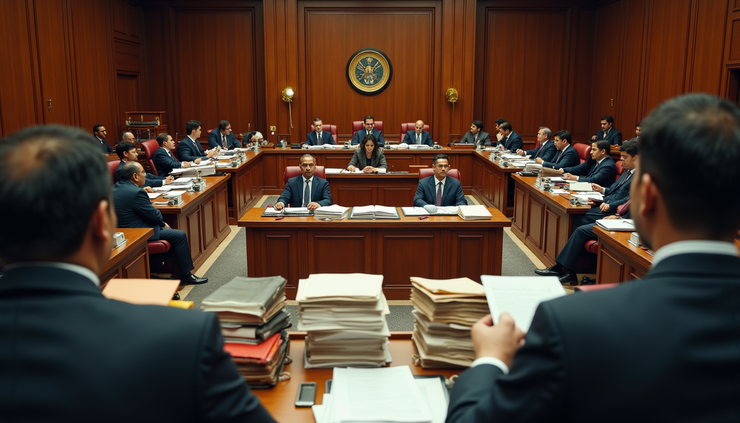
The Scale of the Backlog and Its Origins
The India court backlog 2026 is unprecedented. Over 180,000 cases have been pending for more than 30 years. The oldest pending case, a bank liquidation suit filed in November 1948, was only disposed of in 2023 because no one appeared in court. This example highlights the inefficiency and neglect that have plagued the system for decades.
A report by Niti Aayog once estimated that at the then-current disposal rates, it would take 324 years to clear the backlog. Since then, the number of pending cases has only grown, making the timeline even longer. The sheer volume of cases overwhelms the judiciary, with the average judge handling over 2,200 cases. India has only 15 judges per million people, far below the Law Commission's recommendation of 50 and countries like Canada, which has 65 judges per million.
The Human Cost of Delayed Justice
The backlog is not just a bureaucratic problem; it has real human consequences. One of the most alarming outcomes is the plight of undertrial prisoners in India. These are people who have not been convicted but remain in jail while awaiting trial. Currently, 76% of India's prison population—over 440,000 individuals—are undertrials. Many belong to marginalized communities such as Dalits, Adivasis, Muslims, and the poor.
The bail system exacerbates this issue. Legal researchers describe monetary bail as a "premium on poverty" because it assesses a person's bank balance rather than their flight risk. This means that poorer defendants often remain in jail simply because they cannot afford bail. The share of undertrials held without conviction for more than five years has tripled since 2012. In 301 prisons across India, every inmate is an undertrial, trapped in a system that delays justice indefinitely.

The Imbalance in Legal Aid and Policing Budgets
The India judiciary crisis is also reflected in how resources are allocated. India spends just Rs 6.46 per person annually on legal aid, compared to Rs 1,275 per person on policing. This stark imbalance means that while law enforcement is well-funded, access to legal support remains severely under-resourced.
This gap affects the ability of poor and marginalized people to defend themselves in court. Without adequate legal aid, many cannot navigate the complex legal system, leading to prolonged trials and increased chances of wrongful detention. The lack of investment in legal aid perpetuates inequality and deepens the crisis of delayed justice.
Structural Challenges in the Judiciary
Several structural issues contribute to the backlog and inefficiency:
Judge vacancies: High Courts have a 33% vacancy rate, worsening the shortage of judges.
Government litigation: The government is the largest litigant, responsible for 50% of all pending cases. When the state files cases but fails to actively pursue them, private citizens get caught in endless procedural delays.
Case overload: Judges face overwhelming caseloads, limiting their ability to focus on each case thoroughly.
Justice Pradeep Nandrajog, former Chief Justice of the Bombay and Rajasthan High Courts, summed up the situation: the judicial system is being pushed toward failure. For the powerful, delay is a tactic; for the poor, delay is punishment.

What Needs to Change
Addressing the 56 million pending cases India faces requires urgent reforms:
Increase judicial capacity: Hiring more judges and reducing vacancies can help manage caseloads better.
Improve legal aid funding: Boosting legal aid budgets will help marginalized groups access justice.
Reform bail laws: Moving away from monetary bail to risk-based assessments can reduce unnecessary pretrial detention.
Streamline government litigation: The government should avoid filing frivolous cases and actively pursue those it initiates.
Use technology: Digital case management and virtual hearings can speed up processes and reduce delays.
The Road Ahead
The India justice delayed crisis is a complex problem rooted in systemic issues and resource gaps. It demands coordinated efforts from policymakers, the judiciary, and civil society. Without change, millions will continue to suffer from delayed justice, and the legal system will remain a barrier rather than a pathway to fairness.
For those navigating the court system, understanding these challenges is crucial. Advocates and reformers must push for transparency, accountability, and investment in the judiciary. Only then can India hope to reduce its backlog and ensure justice is accessible to all.
This post provides an overview of the critical issues behind the India court backlog 2026 and highlights the urgent need for reform. Readers interested in legal reform, social justice, and governance can contribute by raising awareness and supporting initiatives aimed at strengthening India’s judicial system.


