Holographic World Tours: The Future of Eco-Friendly Live Performances

Global touring is facing a major transformation. By 2026, artists will no longer need to travel across continents to perform live. Instead, they will use holographic concerts 2026 to deliver immersive live entertainment simultaneously in multiple cities. #VirtualConcert #FutureOfMusic #HologramTour #EntertainmentTech #CreativeEconomy
This new approach uses virtual world tour technology and volumetric capture performance to create life-sized holograms of performers in specialized studios. These holograms then appear on stages worldwide, offering fans synchronized shows with spatial audio and augmented visuals tailored to each location.
This shift not only reduces the environmental impact of touring but also opens new possibilities for the future music industry. This article explores how holographic world tours work, their benefits, challenges, and what they mean for music producers, entertainment executives, and digital experience designers.

How Holographic World Tours Work
Artists record their performances in studios equipped with dozens of cameras capturing every angle. This process, known as volumetric capture performance, creates a 3D digital model of the artist in ultra-high definition. The model is then streamed live or pre-recorded to multiple venues worldwide.
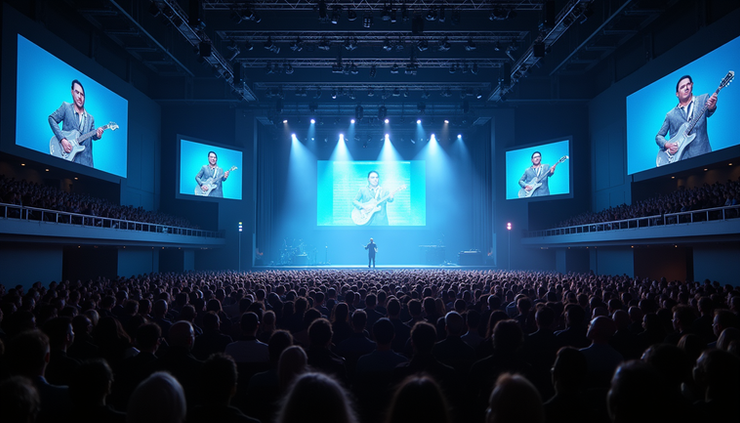
Each venue projects the hologram as a life-sized, three-dimensional image on stage. Fans experience the show as if the artist is physically present, enhanced by spatial audio that adjusts to the venue’s acoustics and augmented visuals that reflect the city’s culture or event theme.
This technology allows artists to perform multiple shows in different cities on the same night without leaving the studio. It also enables interactive elements, such as real-time fan engagement through mobile apps or augmented reality features.
Environmental Impact and Cost Benefits
Touring traditionally involves extensive air travel, road transport, and large-scale logistics, all contributing to significant carbon emissions. The new holographic model drastically reduces this footprint by eliminating the need for physical travel.
Reduced carbon emissions: No flights or long-distance transport for artists and crew.
Lower production costs: Savings on travel, accommodation, and equipment shipping.
Increased show frequency: Artists can perform in multiple locations in one evening, increasing revenue potential.
For example, a major pop star planning a 50-city tour could reduce their carbon footprint by over 70% using holographic concerts 2026. This approach aligns with growing demands from fans and industry stakeholders for more sustainable entertainment options.
Audience Experience and Industry Reception
Some critics question whether holographic concerts can capture the energy and connection of live performances. The physical presence of an artist on stage creates a unique atmosphere that is difficult to replicate digitally.
Yet, early adopters report strong ticket sales and enthusiastic fan engagement. The immersive nature of the shows, combined with interactive features, offers a new kind of live experience. Fans can enjoy high-quality visuals and sound tailored to their venue, with added layers of augmented reality that enhance storytelling.
Entertainment executives see this as a hybrid model that complements traditional tours rather than replacing them entirely. It offers flexibility and scalability, especially for artists with global fanbases.
Implications for Music Producers and Digital Experience Designers
The rise of holographic world tours creates new opportunities and challenges for professionals in the music and entertainment sectors.
Music producers must adapt to creating performances optimized for volumetric capture, considering how visuals and sound translate into holographic formats.
Digital experience designers play a crucial role in crafting interactive elements and augmented visuals that enhance immersion and fan engagement.
Collaboration between technical teams and artists will be essential to deliver seamless shows that feel authentic and captivating.
This technology also encourages innovation in stage design, lighting, and sound engineering, pushing the boundaries of what live entertainment can offer.
Looking Ahead: The Future Music Industry
Holographic concerts 2026 represent a significant step toward a more sustainable and accessible live music scene. They offer a model where artists can reach global audiences without the environmental and logistical costs of traditional touring.
As technology advances, expect improvements in hologram realism, interactivity, and integration with virtual and augmented reality platforms. This will create richer, more personalized experiences for fans and new revenue streams for artists and promoters.
The future music industry will likely blend physical and digital performances, giving audiences the choice to attend in person or join immersive holographic shows from anywhere in the world.


