Uncovering the Lost Legacy of the Samurai: The Keicho Embassy's Journey to Venice

In 1873, as Japan emerged from centuries of isolation, a diplomatic mission known as the Iwakura Embassy arrived in Venice, Italy, with the goal of studying Western politics. What they found instead was a remarkable link to a forgotten chapter of Japanese history: two letters signed by a samurai, written in Latin, dating back to 1615. This discovery revealed a story that had been erased from Japanese memory for over 250 years—the journey of the Keicho Embassy, led by the samurai Hasekura Tsunenaga, who walked the streets of Venice centuries before the Iwakura Mission.
This post explores the incredible tale of the Samurai in Venice, a story of ambition, diplomacy, and cultural exchange that connects Feudal Japan with Renaissance Europe. It sheds light on the Japanese hidden history that challenges common perceptions and invites us to rethink the global interactions of the early 17th century.

The Historical Context of the Keicho Embassy
In the early 1600s, Japan was under the rule of powerful warlords, and the country was beginning to close itself off from the outside world. Yet, Date Masamune, the ambitious daimyo of the Sendai domain, sought to break this isolation. He partnered with Luis Sotelo, a Franciscan friar with a vision to establish direct trade and diplomatic relations with the Spanish Empire and the Vatican.
This partnership led to the creation of the Keicho Embassy, a diplomatic mission that would travel across the Pacific and Atlantic Oceans to reach Europe. The embassy was led by Hasekura Tsunenaga, a samurai vassal of Date Masamune, who became the first Japanese ambassador to Europe.
The mission’s goals were clear:
Establish direct trade routes with Spain and its colonies
Gain support from the Pope for Christianity in Japan
Bypass the Portuguese and Dutch monopolies on Asian trade
Despite the mission’s bold objectives, Japan soon reversed its openness. The Tokugawa shogunate banned Christianity and sealed the country’s borders, erasing the Keicho Embassy from official history.
Hasekura Tsunenaga’s Journey to Venice
Hasekura Tsunenaga’s voyage began in 1613, departing from Japan aboard the ship San Juan Bautista. The journey took him across the Pacific to Mexico, then across the Atlantic to Spain, and finally to Italy. His arrival in Venice marked a significant moment: a samurai walking the cobblestone streets of a European city, engaging in diplomacy and cultural exchange.
During his time in Venice, Hasekura presented letters and gifts from Date Masamune and met with local officials. The embassy’s presence was documented in Venetian archives, but these records remained largely unknown in Japan until the Iwakura Mission discovery in the 19th century.
The letters found in Venice, written in Latin and signed by Hasekura, provide rare evidence of this mission. They reveal the samurai’s role not only as a warrior but also as a diplomat and cultural ambassador.
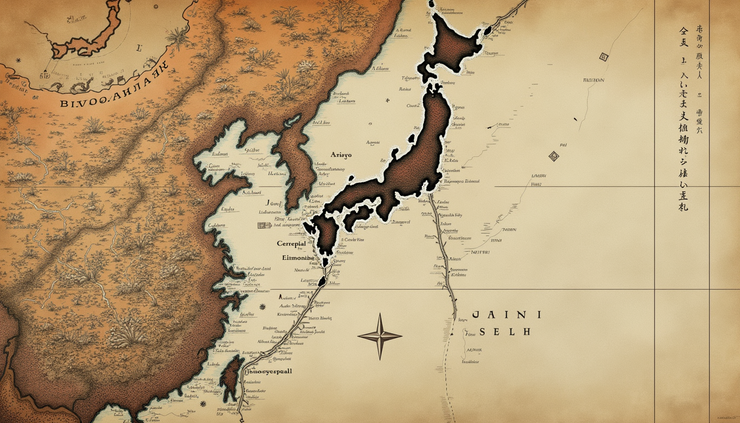
The Impact of Date Masamune’s Ambition on History
Date Masamune’s decision to send the Keicho Embassy was a bold move in a time when Japan was increasingly isolationist. His vision extended beyond military power to include international diplomacy and trade.
The mission’s failure to establish lasting relations was due to political changes in Japan, including the shogunate’s crackdown on Christianity and foreign influence. Despite this, the embassy’s journey left a lasting mark on both Japanese and European history.
The Date Masamune history is often overshadowed by the Tokugawa shogunate’s policies, but his efforts highlight a period of openness and curiosity that contradicts the popular narrative of Japan’s closed borders.
Rediscovering Japanese Hidden History Through the Iwakura Mission Discovery
The Iwakura Mission’s arrival in Venice in 1873 led to the rediscovery of the Keicho Embassy’s documents. This Iwakura Mission discovery revealed a hidden chapter of Japanese history that had been lost for centuries.
The mission’s findings challenged the idea that Japan had no contact with Europe before the mid-19th century. Instead, they showed that Japanese diplomats and samurai had engaged with European powers long before the Meiji Restoration.
This rediscovery has inspired historians and cultural travelers to explore the connections between Japan and Europe during the early modern period. It also encourages a broader understanding of Japan’s role in global history.

Why the Keicho Embassy Matters Today
The story of the Samurai in Venice offers valuable lessons about cultural exchange, diplomacy, and the complexities of history. It reminds us that history is not fixed but can be rediscovered and reinterpreted.
For history buffs and academics, the Keicho Embassy provides a fascinating case study of early globalization and cross-cultural interaction. For cultural travelers and Japanophiles, it opens a window into a unique moment when two very different worlds met.
The embassy’s journey also highlights the importance of archives and historical documents in uncovering forgotten stories. Without the Iwakura Mission discovery, this chapter might have remained lost.
Final Thoughts
The Keicho Embassy’s journey to Venice is more than a historical curiosity. It is a testament to the ambition and courage of individuals like Hasekura Tsunenaga and Date Masamune, who dared to bridge worlds separated by vast oceans and cultural differences.
This story challenges us to look beyond the familiar narratives and explore the Japanese hidden history that continues to shape our understanding of the past. The discovery made by the Iwakura Mission invites us to keep searching for the unexpected connections that history holds.
If you are passionate about history or fascinated by Japan’s rich cultural heritage, the tale of the Keicho Embassy offers a compelling journey into a forgotten world. It shows that history is never fully written; it waits for those curious enough to uncover its secrets.


