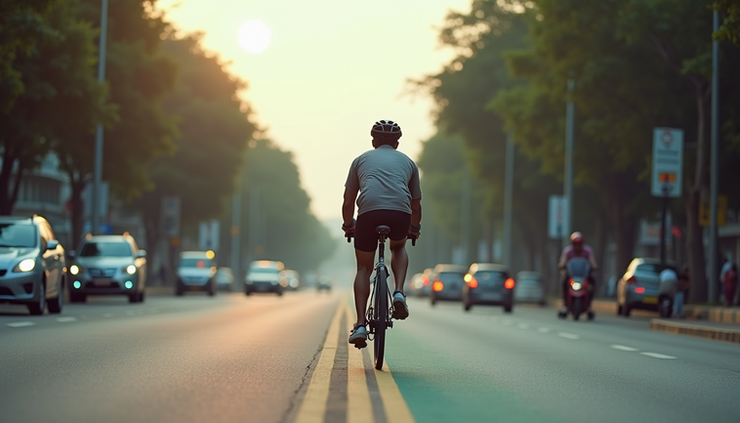
Transforming Urban Mobility: Lessons from Paris and India's Cycling Dilemma

In 2025, Paris earned the title of the world’s top cycle-friendly city, a remarkable transformation from its past reputation for traffic jams and pollution. This change came through determined political action, protected cycling infrastructure, and a clear decision to reclaim road space for people rather than cars. Meanwhile, India’s major cities, despite vocal support for cycling, continue to struggle with poor cycling infrastructure and high cyclist fatalities. The contrast between Paris and Indian cities highlights critical lessons for urban mobility and the urgent need to rethink transport planning in India.

The Paris Example: Political Will and Infrastructure Matter
Paris’s success did not happen overnight. A decade ago, the city was infamous for gridlock and air pollution. The turning point came when city leaders prioritized cycling as a core part of urban mobility. Key steps included:
Reallocating road space: Paris reduced car lanes and parking spots to create wide, protected cycle lanes.
Enforcing traffic rules: Strict measures prevented cars from encroaching on cycle paths.
Integrating cycling with public transport: Bike-sharing programs and secure parking made cycling convenient.
Promoting cycling culture: Campaigns encouraged residents to choose bicycles for daily commutes.
These actions led to a safer, more accessible cycling environment, reducing pollution and improving public health. Paris’s approach shows that political commitment combined with clear infrastructure planning can transform urban mobility.
India’s Cycling Reality: Infrastructure Failure and Safety Risks
India has millions of cyclists, many of whom rely on bicycles as their only affordable transport option. Delivery workers, domestic helpers, and daily commuters navigate chaotic streets without dedicated or safe cycling infrastructure. Despite government endorsements of cycling as a pollution solution, the reality on the ground tells a different story.
Fragmented and Encroached Cycling Lanes
In cities like Delhi and Mumbai, cycling lanes are often incomplete or poorly maintained. For example:
Delhi cycling lanes encroachment: Cycle tracks frequently disappear at intersections or merge abruptly with fast-moving traffic. Vendors and parked two-wheelers block many lanes, forcing cyclists into dangerous situations.
Kochi’s green-painted lane: A Smart City-funded cycle lane on Park Avenue Road has become an illegal parking zone for cars, rendering it unusable for cyclists.
Mumbai’s dabbawallas: These delivery workers carry heavy loads on bicycles through streets with no dedicated lanes, exposing them to constant risk.
A 2026 study published in Nature Cities found that urban planning documents in Indian cities mention cycling ambitions but fail to deliver consistent, enforced infrastructure. This failure contributes to unsafe conditions and discourages cycling as a viable transport mode.
High Cyclist Fatalities on Indian Roads
The Ministry of Road Transport and Highways reported 4,560 cyclist deaths in India in 2023, a staggering figure that underscores the dangers cyclists face daily. These deaths reflect systemic issues:
Lack of protected cycling infrastructure
Car-centric urban planning that prioritizes motor vehicles
Poor enforcement of traffic laws protecting cyclists
This tragic toll highlights the urgent need to address India cycling infrastructure failure to protect vulnerable road users.
Urban Planning in Indian Cities: The Car-Centric Challenge
Indian cities have long been designed around cars, with wide roads and flyovers catering to motorized traffic. This car-centric planning leaves little room for bicycles or pedestrians. Key challenges include:
Road space allocation: Priority is given to cars, often at the expense of cycle lanes or sidewalks.
Inadequate enforcement: Even where cycle lanes exist, encroachment by vehicles and vendors is common.
Lack of integration: Cycling is rarely integrated with public transport or urban development plans.
This approach limits the potential of bicycles to reduce pollution and ease congestion. Without a shift in urban planning priorities, cycling will remain unsafe and unattractive for many.

Practical Steps to Improve Urban Mobility with Bicycles in India
To transform urban mobility and reduce cyclist deaths in India, cities must move beyond rhetoric and implement concrete changes:
Build continuous, protected cycle lanes: Infrastructure must be safe, connected, and free from encroachment.
Reallocate road space from cars to bicycles: Cities should reduce car lanes and parking to create room for cyclists.
Enforce traffic rules strictly: Prevent illegal parking and vendor encroachment on cycle tracks.
Promote cycling culture and awareness: Campaigns can encourage safe cycling and respect among all road users.
Integrate cycling with public transport: Secure bike parking and bike-sharing systems can make cycling more convenient.
Engage communities in planning: Cyclists and local residents should have a voice in designing infrastructure.
These steps require political will and sustained commitment but can dramatically improve urban mobility India bicycles depend on.
The Way Forward: Learning from Paris, Acting for India
Paris’s transformation shows that cities can become cycle-friendly with clear priorities and action. Indian cities face unique challenges but also have a large base of cyclists who need safe, reliable infrastructure. The gap between policy statements and on-ground reality must close.
Urban mobility India bicycles rely on will improve only when infrastructure is built and protected, and when urban planning shifts away from car-centric models. Reducing cyclist deaths India roads demands urgent attention and coordinated efforts from policymakers, planners, and citizens.