Revolutionizing Transfusion Medicine: The Promise of Lab-Grown Red Blood Cells

Hospitals worldwide face persistent challenges in maintaining adequate blood supplies. Emergencies, natural disasters, and regions with limited infrastructure often experience critical shortages.
Now, a breakthrough in medical science offers a new path: lab-grown blood. Researchers have launched large-scale clinical trials for synthetic red blood cells created through stem cell transfusion technology and advanced bioreactors. This medical innovation trial could transform how healthcare systems manage blood transfusions, potentially ending blood-type shortages and improving patient outcomes globally.

How Lab-Grown Blood Works
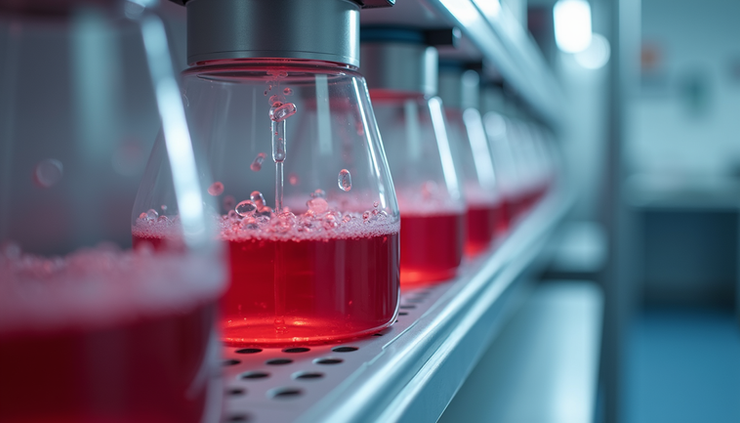
Lab-grown blood 2026 is produced by cultivating stem cells in controlled bioreactors that mimic the human body’s environment. Scientists extract stem cells, often from adult donors or cord blood, and stimulate them to develop into red blood cells. These synthetic red blood cells carry oxygen just like natural ones but are engineered to be universally compatible, meaning they can be transfused into any patient without blood-type matching.
This universal compatibility addresses one of the biggest hurdles in transfusion medicine: the need for precise blood typing and matching. It also reduces the risk of transfusion-transmitted infections, which remain a concern with donated blood despite rigorous screening.
Benefits Beyond Supply Stability
The advantages of lab-grown blood extend far beyond solving supply shortages:
Longer Shelf Life
Unlike donated blood, which typically lasts 35 to 42 days, synthetic red blood cells can be stored longer without losing functionality. This reduces waste and ensures availability during emergencies.
Customization for Rare Blood Types
Patients with rare blood types or antibodies often face difficulties finding compatible donors. Lab-grown blood can be tailored to meet these specific needs, improving treatment options.
Reduced Infection Risk
Since lab-grown blood is produced in sterile environments, it eliminates risks associated with bloodborne pathogens.
Scalability and On-Demand Production
Bioreactors can produce blood cells as needed, enabling rapid response during crises or in remote locations.
Impact on Emergency and Military Medicine
Emergency care often depends on quick access to compatible blood. In disaster zones or during mass casualty events, blood shortages can cost lives. Lab-grown blood 2026 promises a stable, on-demand supply that could save countless patients.
Military medicine stands to benefit significantly. Soldiers deployed in remote or hostile environments often lack access to safe blood supplies. Synthetic red blood cells could be produced on-site or transported without refrigeration, enhancing battlefield care.
Space Travel and Remote Expeditions
Long-duration space missions and remote expeditions face unique challenges in medical care. Blood storage and supply are major concerns when resupply is impossible. Lab-grown blood offers a solution by enabling stable, long-lasting blood products that can be manufactured on demand in space or isolated environments.
This capability supports the future of healthcare beyond Earth, ensuring astronauts and explorers have access to life-saving transfusions without relying on Earth-based donations.
Challenges and the Road Ahead
While the promise of lab-grown blood is clear, several challenges remain before widespread adoption:
Clinical Trial Results
The ongoing medical innovation trials must confirm safety, efficacy, and scalability. Early results are promising, but full regulatory approval requires extensive data.
Cost and Production Scale
Producing synthetic red blood cells currently involves complex processes and high costs. Scaling production to meet global demand will require technological advances and investment.
Regulatory and Ethical Considerations
New medical products face rigorous regulatory scrutiny. Ethical questions about stem cell sources and manufacturing practices also require careful attention.
Despite these hurdles, the potential benefits drive continued research and investment. The shift from donation-dependent blood systems to bio-manufactured precision supply chains could redefine transfusion medicine.

What This Means for Healthcare Innovators and Investors
For healthcare innovators, stem cell transfusion technology represents a frontier with vast potential. Developing efficient bioreactors, improving cell culture methods, and integrating synthetic blood into clinical practice are key areas for innovation.
Biotech investors should watch the progress of lab-grown blood 2026 closely. Successful trials could open new markets and disrupt traditional blood banking. Investing in companies pioneering synthetic red blood cells offers opportunities to support technologies that improve global health outcomes.
Medical researchers can contribute by exploring new applications, refining production techniques, and studying long-term effects of synthetic blood transfusions.
The Future of Healthcare Transfusion
Lab-grown blood 2026 is poised to change how healthcare systems manage blood supplies. By providing a reliable, safe, and customizable source of red blood cells, it addresses longstanding challenges in transfusion medicine. If ongoing trials confirm its promise, synthetic red blood cells will become a vital tool in emergency care, military medicine, space exploration, and beyond.
This shift will reduce dependence on donors, improve patient safety, and enable precise blood matching for rare conditions. The future of healthcare may flow not from donors but from laboratories, marking a new chapter in medical science and patient care.
Healthcare innovators, biotech investors, and medical researchers have a unique opportunity to shape this transformation. Supporting and advancing stem cell transfusion technology today will help build a stronger, more resilient healthcare system for tomorrow.


