India Must Regulate Loot Boxes Before They Hook Children

Open a popular mobile game on a child’s phone and the screen rarely looks like a simple toy. It looks like a shop, a casino-lite reward machine, a habit tracker, a countdown clock and a social arena folded into one bright app.
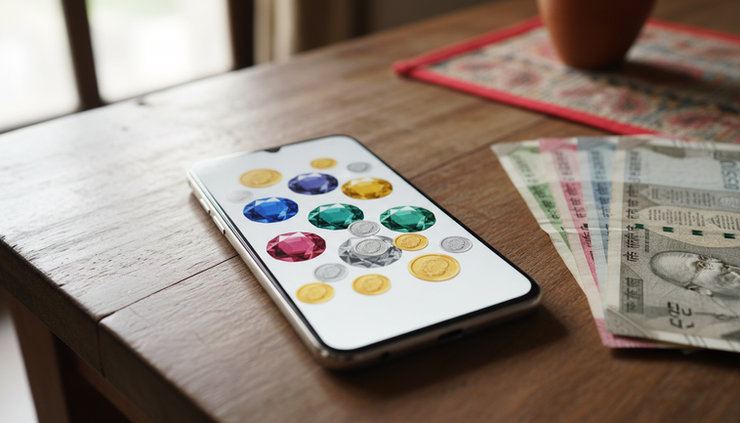
A child may see a chest that can be opened for a chance at a rare item. A wheel promises a prize if spun now. A login streak warns that missing a day will erase progress. A “limited” bundle flashes at a discount for the next 11 minutes. Gems, coins or diamonds stand between the rupee paid and the reward received.
This is not accidental design. It is behavioural design.
India has moved, rightly, against online money games, betting and wagering. The Promotion and Regulation of Online Gaming Act in 2025 drew a firm line around real-money formats. Yet the law leaves a large blind spot. Free-to-play games with paid loot boxes, gacha pulls, pay-to-win upgrades and habit-forming reward loops can still sit comfortably on a child’s device.
That gap matters because India is now the world’s largest mobile gaming market by user base, with well over 500 million gamers and a market racing past nine billion dollars. A large share of this market is young. Many are still developing the impulse control, risk judgement and emotional regulation that adults take for granted.
If India can regulate betting because it recognises the threat of addiction and financial harm, it can regulate loot boxes because they use many of the same psychological hooks, only dressed in cartoon art and sold as play.

Loot boxes are not harmless surprises
A loot box is a paid or earnable in-game container that gives a randomised reward. The child may know the broad category of reward, but not the exact item. One box may contain a common costume. Another may contain a rare character, weapon, upgrade or power. The uncertainty is the point.
In many games, loot boxes appear alongside similar systems:
Gacha pulls Players spend in-game currency for a random character or item, often with rarity tiers.
Pay-to-win upgrades Players can buy power, speed, lives or advantages that affect progress.
Daily login streaks Games reward consecutive play and punish absence by reducing or resetting benefits.
Limited-time offers The game applies pressure by making a reward available only for a short window.
Layered virtual currencies Rupees become gems, diamonds, tokens or coins, making the real cost harder to feel.
Each feature may look minor on its own. Together, they can create a loop that is hard for children to resist. The loop is simple: trigger, anticipation, reward, regret, repeat.
A child does not only pay for a digital chest. The child pays for the feeling that the next chest might be the one. That is why the comparison with gambling is not exaggerated. It is a behavioural comparison, not a moral panic.
Peer-reviewed research has repeatedly found links between loot box spending and problem gambling symptoms. The association does not prove that every child who opens a loot box will develop gambling problems. It does suggest that these systems tap into similar psychological pathways, especially variable rewards.
Variable rewards are powerful because the brain responds strongly to uncertainty. A guaranteed prize has a clear end. A random reward keeps the mind engaged. The near miss, the almost-rare item, the “try again” prompt, all of it encourages one more attempt.
For adults, this is already risky. For children, the risk is sharper.
Children and adolescents are still developing executive function. They have a weaker ability to delay gratification, evaluate probability and connect small purchases to long-term cost. A child may understand that ₹89 is money, but not fully grasp what 10 such purchases mean over a month. A child may understand that a rare character is unlikely, but still feel that the next pull is “due”.
That is the danger in the phrase loot boxes children. It is not just about children encountering chance-based rewards. It is about chance-based rewards meeting a brain still learning how to stop.
The law targets betting, while game design slips through
The Online Gaming Act 2025 marked a major shift in India’s approach to online gaming. It recognised that real-money games, especially wagering and betting formats, need firm public oversight. That was necessary. It was also incomplete.
The Act’s central concern is money gaming. If a game involves staking money for the chance to win money or monetary value, it falls into the zone of concern. But many of the most habit-forming games played by children do not offer cash prizes. They offer status, progress, scarcity and social advantage.
A child may not win money from a loot box. Yet the child can still lose money, lose sleep, lose attention and develop unhealthy patterns around risk and reward.
That distinction exposes a policy weakness. India has drawn a line around explicit gambling, but not around gambling-like design.
The problem is not limited to games that carry an age rating for older teens. Many child-friendly mobile titles use the same mechanics in softer forms. A colourful farm game can sell mystery bundles. A fantasy adventure can sell random character pulls. A racing game can hide performance advantages behind paid crates. A puzzle game can use timers and lives to make children pay to keep playing.
India’s Consumer Protection framework has already taken notice of dark patterns. The Central Consumer Protection Authority’s dark patterns guidelines recognise deceptive design, including tactics that manipulate users into choices they may not otherwise make. These guidelines matter. They give regulators language to challenge tricks that exploit friction, urgency or confusion.
But guidelines built for e-commerce checkouts do not automatically solve game economies.
A shopping website may hide a fee at checkout. A mobile game can bury real spending under four layers of in-game currency, then combine that with scarcity, social comparison and random rewards. A shopping app may use a countdown timer to sell shoes. A game can use a timer after a child loses a match, when frustration is already high.
The design context is different. The user may be a minor. The product is interactive. The pressure is repeated. The reward is emotional.
That is why enforcement cannot treat gaming dark patterns as a small extension of online retail. It needs its own rules, its own audit methods and its own child safety standards.
The strongest hooks hide behind bright design
The most effective manipulative systems in games rarely look threatening. They look cheerful. They use reward sounds, friendly mascots, glowing chests and celebratory animations. That is part of the challenge for parents, clinicians and policymakers.
A betting app looks like a betting app. A child’s game may look like a playground.
Yet the underlying mechanics can still train compulsive behaviour. Several design patterns deserve special attention.
Randomised rewards make spending feel like trying
When a child buys a specific item, the transaction is at least clear. Pay ₹99, receive a costume. Pay ₹199, unlock a level pack. The child may still overspend, but the product is known.
Loot boxes change the nature of the purchase. The child buys a chance. The game can then encourage repeated spending by showing rarity tiers, partial collections or near misses.
This matters because probability is hard even for adults. Children are especially vulnerable to misunderstanding odds. A “5% chance” may be read emotionally as “possible”, not mathematically as “unlikely”. If the game adds a sparkling animation after a failed attempt, the child receives excitement even without a valuable reward.
That excitement becomes part of the product.
Streaks turn absence into loss
Daily rewards look harmless. Open the app, receive a coin. Return tomorrow, receive more. Stay for seven days, receive a rare item.
The harm comes when the game turns routine into obligation. A child who misses one day may lose a streak, a bonus or a chance at a bigger reward. The game teaches that not playing has a penalty.
For school-age children, this can collide with homework, sleep, meals, sports and family time. It can also create anxiety. The child is no longer asking, “Do I want to play?” The child is thinking, “I must log in or I will lose something.”
That behavioural pressure is one reason China’s 2025 rules on minors are so important. By banning daily login rewards, consecutive-spend bonuses and chance-based sales to minors, China recognised that harm can come not only from what a child buys, but from how the game trains repeated engagement.
Countdown timers manufacture urgency
A limited-time sale can be legitimate in adult commerce. In children’s games, the ethics change. The user may not understand that another offer will appear later. The child may panic that the opportunity is disappearing forever.
Urgency reduces reflection. That is its purpose. It pushes the user to act before thinking.
For a child, this can mean begging a parent for an instant purchase, using saved payment details or spending stored wallet balance without understanding the decision. When that timer is attached to a randomised item or a competitive advantage, the pressure grows.
Virtual currencies weaken the pain of payment
Rupees feel real. Gems feel playful.
Many games deliberately separate real money from in-game spending. The user buys a bundle of currency, often in uneven amounts. A costume costs 700 gems, but the store sells 500 or 1,200. A loot box costs 160 diamonds, but the currency pack leaves a small balance behind. That leftover balance nudges the next purchase.
This is not a neutral design choice. It reduces price clarity. It also makes it harder for children and parents to track how much has been spent.
The same principle is widely used in casinos, where chips distance the player from cash. The digital version may look cuter, but the psychological effect is familiar.
Social pressure adds another layer
Children do not play in isolation. They compare skins, ranks, characters and achievements. A rare item can become a status symbol in a classroom or peer group. A child who cannot afford paid items may feel left behind. A child who can buy them may feel pressure to keep up.
This social layer makes spending feel less like consumption and more like belonging.
That matters for mental health professionals assessing gaming disorder kids. The behaviour may not be driven only by screen time. It may involve status anxiety, fear of missing out, reward sensitivity, frustration tolerance and family conflict around money.
India already has enough warning signs to act
India does not need to wait for a generation of children to show harm before regulating these mechanics. The warning signs are already visible in the structure of the market.
India has scale. Hundreds of millions of users mean even a small harmful pattern can affect a large number of families. India also has cheap smartphones, low data costs and a young population. Mobile games reach children across cities, towns and villages, not just affluent households.
The market has money. When the gaming economy moves past nine billion dollars, the incentive to maximise engagement is intense. The most profitable users are often not the most satisfied users. They are the most retained, the most emotionally invested and, in some cases, the least able to stop.
The user base is young. Many players are under 25. A large share are school-age children and adolescents who use family phones or their own devices. The age gate, where it exists, is often a self-declaration. It is not enough to ask a child to enter a birth year and call that protection.
The regulatory language already exists. India has consumer protection rules, dark patterns guidance and a new online gaming law. The missing piece is not vocabulary. It is focus.
India has the users, the spend and the legal tools. What it lacks is a child-centred rulebook for game design.
This is where the debate on mobile gaming addiction India needs to mature. The question should not be whether all games are bad. They are not. Games can build skill, offer joy, connect friends and support learning. The question is whether products designed for children should be allowed to use chance-based spending and compulsive loops without strict limits.
There is also a fairness issue for the gaming industry itself. Many developers want to build good games without exploiting players. Clear rules can reward responsible studios and prevent a race to the bottom, where the most aggressive monetisation model wins.
A child-safe gaming market would not kill creativity. It would push creativity away from manipulation and towards better play.

What a child-first loot box law should include
India does not need to copy another country line by line. It can build a model that fits Indian families, payment systems and gaming habits. But any serious framework should start with a clear principle: children should not be exposed to paid chance-based rewards.
That principle can translate into practical rules.
Ban paid loot boxes and gacha pulls for minors
The cleanest rule is also the easiest to understand. If a user is under 18, a game should not sell randomised rewards for money or paid currency.
This would cover direct purchases and indirect purchases. A game should not avoid the rule by selling gems first, then allowing those gems to buy loot boxes. If real money enters the path, the rule should apply.
Free rewards can still exist, but even those should be examined when they create pressure to spend later. A free first pull that leads to paid pulls is often a funnel, not a gift.
Require clear rupee pricing
Every purchase shown to a child or parent should display the rupee value clearly. If a box costs 160 diamonds, the interface should show what that means in rupees based on the smallest available purchase bundle.
Games should not hide behind confusing exchange rates. They should not use currency bundles designed to leave stranded balances. They should not make a ₹79 purchase feel like play money.
Clear pricing will not solve every issue, but it restores basic consumer understanding.
Ban manipulative urgency for child users
For minors, regulators should restrict countdown timers, disappearing offers and pressure prompts tied to spending. Games should not tell a child that a paid reward will vanish in minutes unless the claim is genuine and fair. Even then, child-facing scarcity should face strict limits.
The same goes for prompts that appear after a loss, after a failed pull or during emotional high points. A child who has just lost a match should not be targeted with a payment offer that promises relief.
End streak penalties for children
Daily rewards need careful treatment. Rewarding occasional play is one thing. Punishing absence is another.
For child accounts, games should not reset major progress, bonuses or reward tracks simply because a child did not log in. A healthy design lets a child walk away.
A rule like this would support parents who set screen-time boundaries. It would also reduce conflict at home, where children often insist they “have to” log in to protect a streak.
Create a child-safe design rating
India’s age ratings should do more than list violence or mature themes. They should flag monetisation risk.
A game rating could include clear labels such as:
Contains paid random rewards
Contains in-game purchases
Contains time-limited spending prompts
Contains paid competitive advantages
Uses daily login rewards
Uses social pressure mechanics
These labels should appear before download, not buried inside settings. Parents should not need to play for three hours to discover the business model.
Audit major games used by children
Rules are weak without enforcement. India should require large gaming platforms and publishers to submit child-risk disclosures for popular games. Regulators could audit interface flows, payment paths, age assurance, reward odds and dark patterns gaming design.
This does not mean the state reads every line of code. It means the most widely used products face practical accountability, just as food, finance and education products do when children are involved.
Give parents real controls
Parental controls should be simple, visible and default-safe. Families should be able to:
Block all in-app purchases for child accounts
Block paid random rewards specifically
Set monthly spending caps in rupees
Receive instant spending alerts
Disable streak notifications and spending prompts
View a plain-language purchase history
These controls should sit inside app stores, payment systems and games. They should not depend on tech-savvy parents finding hidden settings.
The counterargument deserves an answer
The gaming industry often argues that loot boxes are not gambling because players always receive something. A child who opens a box may not get the rare item, but receives a common item. Since there is no cash-out, the argument goes, there is no gambling harm.
This defence is too narrow.
The harm does not depend only on whether a player can win cash. It depends on whether the system encourages repeated paid attempts through chance, uncertainty and emotional reward. A child can be harmed by spending ₹2,000 chasing a rare character even if the rare character cannot be sold for money. A family can face conflict. A child can learn unhealthy spending patterns. A young player can develop a risky relationship with chance-based rewards.
Another argument says parents should supervise better. Parents do have a role. They can disable purchases, talk about probability, remove saved cards and set screen-time rules. But no parent can inspect every reward algorithm, store design, odds table and behavioural trigger inside every game.
Private supervision cannot replace public standards.
We do not ask parents to personally test whether a toy is toxic. We set safety rules. We do not tell families to decode every medicine label without regulation. We require disclosures and age limits. Digital products used by children deserve the same seriousness.
A third argument says regulation will hurt India’s gaming industry. Poorly written rules could do that. But child-safety rules can be precise. They can target exploitative monetisation while leaving gameplay, storytelling, esports, subscriptions, one-time purchases and cosmetic stores intact.
The future of Indian gaming should not depend on getting children comfortable with gambling-like systems before they can evaluate them.

India can choose better play before harm becomes normal
The debate around loot boxes should not become a fight between people who love games and people who fear them. Many children love games for good reasons. Games can be imaginative, social and demanding in healthy ways. They can teach persistence, problem-solving and teamwork.
The problem begins when the business model bends play around compulsion.
A six-year-old should not have to resist a monetisation system shaped by behavioural science. A 12-year-old should not carry the pressure of daily streaks into bedtime. A teenager should not be trained to chase random rewards through small payments that add up quietly. Parents should not have to become forensic accountants of gems and diamonds. Clinicians should not be left to treat harms that policy could have reduced upstream.
India has already accepted that online wagering needs firm limits. Now it must accept that gambling-like design can exist without a betting slip. If a game sells chance, disguises cost, punishes absence and pressures children to return, it deserves scrutiny.
A child-first regulatory agenda would protect families without banning play. It would tell the industry that children are not fair targets for engineered compulsion. It would give responsible developers a clearer path. It would bring India’s digital policy in line with the reality of its gaming market.
The next great Indian gaming story should not be built on hooked children. It should be built on trust, safety and play that a child can leave without losing.


