Earth Day 2026: Mobilizing India for Our Power and Our Planet

Every April 22nd, the world pauses to reflect on the planet beneath its feet. Earth Day 2026 feels different. This year’s theme, Our Power, Our Planet, is not a gentle reminder but a clear call to action. It rejects the idea that doing nothing is neutral. For India, where the Ministry of Earth Sciences is actively engaging schools, colleges, institutions, and local governments under this banner, Earth Day means much more than planting trees or sharing green messages. It is a movement rooted in real change.
The Urgency Behind Earth Day 2026
The past year has seen over 400 rollbacks of environmental protections worldwide. Communities have faced worsening air pollution, shrinking water supplies, and lives shortened by toxic exposure. This global setback demands a fierce response. Youth coalitions, tribal nations, local councils, and families have risen to the challenge, showing that environmental progress depends on daily choices and community solidarity, not just government policies.
India’s situation is urgent and personal. Cities struggle with poor air quality, groundwater levels drop rapidly, and climate change impacts grow more visible. Yet, India also leads the world in solar energy capacity, with youth volunteers mapping wetlands and restoring mangroves. The government’s Healthy Energy campaign reaches rural women, offering solar alternatives to polluting cooking fuels. This energy for change is real, grassroots, and unstoppable.
Mobilizing Communities Across India
Earth Day 2026 actions began on April 18th to allow working people and students to participate without losing workdays. Across metros, small towns, and border regions, communities are organizing:
Cleanups of streets, rivers, and public spaces
Climate marches advocating for stronger environmental policies
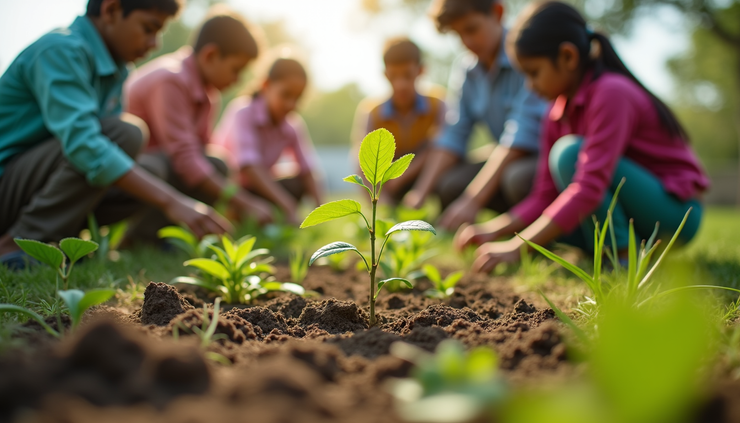
Tree-planting drives focusing on native species and urban green spaces
Teach-ins and workshops educating citizens on sustainability India 2026 goals
Town halls where local leaders discuss environmental action India can take
These efforts reflect the theme Our Power Our Planet by emphasizing that every individual and community holds power to protect the environment.
The Role of Youth and Education
Young people in India are at the forefront of this movement. Schools and colleges have integrated environmental education into their curricula, supported by the Ministry of Earth Sciences. Students participate in projects like:
Mapping wetlands to protect biodiversity
Restoring mangrove forests along coastal areas
Promoting solar energy use in rural households
Advocating for clean air policies in urban centers
These initiatives build a climate change community that is informed, motivated, and ready to act. The youth’s involvement ensures that sustainability India 2026 is not just a government agenda but a shared vision.

Government and Grassroots Collaboration
The Indian government’s Healthy Energy campaign is a key example of combining policy with grassroots action. It provides solar-powered cooking solutions to rural women, reducing reliance on carbon-heavy fuels. This initiative improves health, cuts emissions, and empowers women economically.
Local governments and NGOs also play vital roles. They organize community cleanups, climate education programs, and renewable energy workshops. These efforts strengthen the climate change community and demonstrate how environmental action India-wide can be practical and inclusive.
Challenges and Opportunities Ahead
Despite progress, challenges remain. Air pollution in cities like Delhi and Mumbai often reaches hazardous levels. Groundwater depletion threatens agriculture and drinking water. Climate change intensifies heatwaves and floods, affecting millions.
Yet, these challenges create opportunities for innovation and collaboration. India’s leadership in solar energy shows how clean technology can scale rapidly. Youth-led conservation projects prove that local knowledge and passion drive real results. The growing awareness and participation in Earth Day 2026 India signal a turning point.
How Individuals Can Join the Movement
Everyone has a role in Our Power Our Planet. Here are practical steps individuals can take:
Reduce plastic use and support recycling programs
Use public transport, cycle, or walk to reduce emissions
Support local tree-planting and wetland restoration projects
Switch to clean energy options where possible
Educate friends and family about sustainability India 2026 goals
Small actions add up when millions participate. Earth Day 2026 is a reminder that environmental progress depends on daily choices and community strength.

Moving Forward with Our Power and Our Planet
Earth Day 2026 India is more than a date on the calendar. It is a movement that calls on every citizen to recognize their power to protect the planet. The theme Our Power Our Planet captures the urgency and hope of this moment. Environmental action India-wide is growing stronger, fueled by youth, communities, and government initiatives.


